

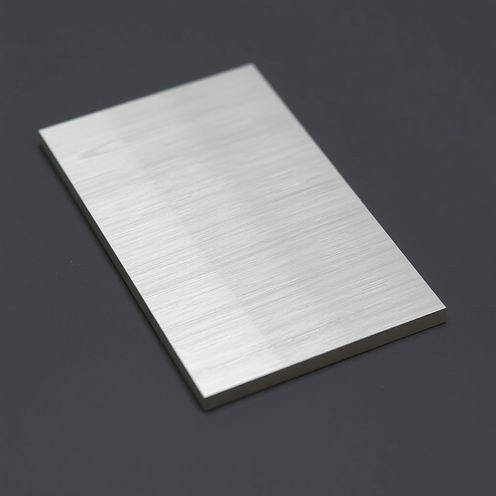
Precision metal components are essential in applications where dimensional precision, consistent manufacturing, and predictable material performance are crucial. Industrial equipment frequently uses parts that have to fit without failure with other parts when they are under mechanical, thermal or environmental stress. Hence, a suitable component should not only have a correct shape, but also should have a correct size. There are requirements for the selection of materials, tolerances, surface condition, manufacturing quality and application requirements, all of which must work together. When precision components are considered, engineers and procurement teams can use these factors to better assess the precision components.
Accuracy Starts with the Application
Firstly, the function of the component in the overall assembly should be taken into account. This part may need close dimensional tolerances due to interaction with moving parts, seals, bearings, fasteners or other precision parts.
It doesn’t have to be the same tolerance for each feature. Determining what dimensions are truly “functional” can help guide manufacturers in their precision efforts.
Completing details of the applications as part of the sourcing of Precision Metal Components USA can help in deciding the manufacturing parameters.
Choose a Suitable Metal Grade
The quality of the components is directly related to the selection of material. Various metals and alloys are available with different combinations of properties such as strength, hardness, toughness, corrosion resistance, conductivity and temperature resistance.
The material to be used must be chosen based on the loads and conditions under which the component will be used during service.
A component with chemicals may need to have increased corrosion resistance, or if it has repeated mechanical loads, it may need to have a combination of properties of strength and fatigue.
Understand the Importance of Tolerances
Tolerances are the amount that a dimension can deviate from its specified value. They are especially critical where parts need to fit together precisely or move in a controlled manner.
But in some cases, very close tolerances may not be required. The accuracy demanded is greater than the application requires, and this can result in longer machining times, increased inspection and greater production costs.
The engineers should then be able to clearly define the critical dimensions and then give reasonable tolerances on the others where performance is not concerned.
Consider Surface Finish
The surface condition may affect the performance of a precision component once installed. Roughness, smoothness, coatings and finishing treatments can impact friction, wear, sealing, corrosion resistance or contact between mating parts.
Depending on the use of the component, the appropriate finish is determined. Propelled elements can have a need for other surface properties than structural elements or parts for electrical applications.
However, if there is a functional use for the surface, then it should be included in the technical drawing or specification.
Evaluate Manufacturing Capabilities
Various manufacturing processes are available to enable the manufacture of precision components based on their geometry, material, tolerances and production volume.
Sometimes the part is so complex that close dimensional tolerances are required, and the only practical process is machining, but other times it might be easier to cut, form, cast, or otherwise manufacture the part to a different design.
When manufacturers Buy Metal fabrication materials, they should consider whether the selected material can be processed effectively using the intended manufacturing method.
Look at Repeatability
Components that are accepted according to specifications once might not be acceptable for an extended production program. Repeatability is important if hundreds or thousands of like parts are needed.
Manufacturers should have appropriate inspection and quality-control systems to ensure dimensional and material uniformity from one production batch to another.
This can help minimize assembly issues and more easily forecast replacement parts during the equipment’s service life.
Consider the Complete Operating Environment
The level of precision cannot make up for poor material properties. If a component is fabricated to very close tolerances, but isn’t up to the demands of the environment, it still will fail early.
When selecting a material, one should take into account its properties relating to temperature, moisture, chemicals, vibration, mechanical loads and repeated operating cycles.
An analysis of these factors together enables intelligent evaluation of dimensional accuracy and material performance to the same engineering goal.
Review Documentation and Inspection
Technical documents can enable buyers to confirm if the component is designed to serve the desired purpose. Helpful information can vary from material grade, dimensions and tolerances, inspection information, surface specifications and certifications, depending on the application.
Prior to production, inspection requirements should be determined, especially in the case of components that are difficult or costly to replace.
Good documentation will also form a handy reference for future orders and quality inspections.
Conclusion
Accurate dimensions, appropriate material properties, manufacturing quality and surface characteristics and depends respectively must be combined to make suitable precision metal components. Engineers should consider the whole application and not only dimensional accuracy as a criterion of quality. A number of factors can enhance the sourcing process, such as clear drawings, realistic tolerances, appropriate materials, and appropriate inspection requirements. For businesses in search of specialized industrial components, they can go to regmetals.com and see the materials that are available and talk with them to see what they require. By finding a balance between precision and reliability, a balanced approach can help ensure reliable assembly, consistent production and the extended service life of the components.